Creating IT Talent Since 2005|ISO Certified & Government Approved IT Institute

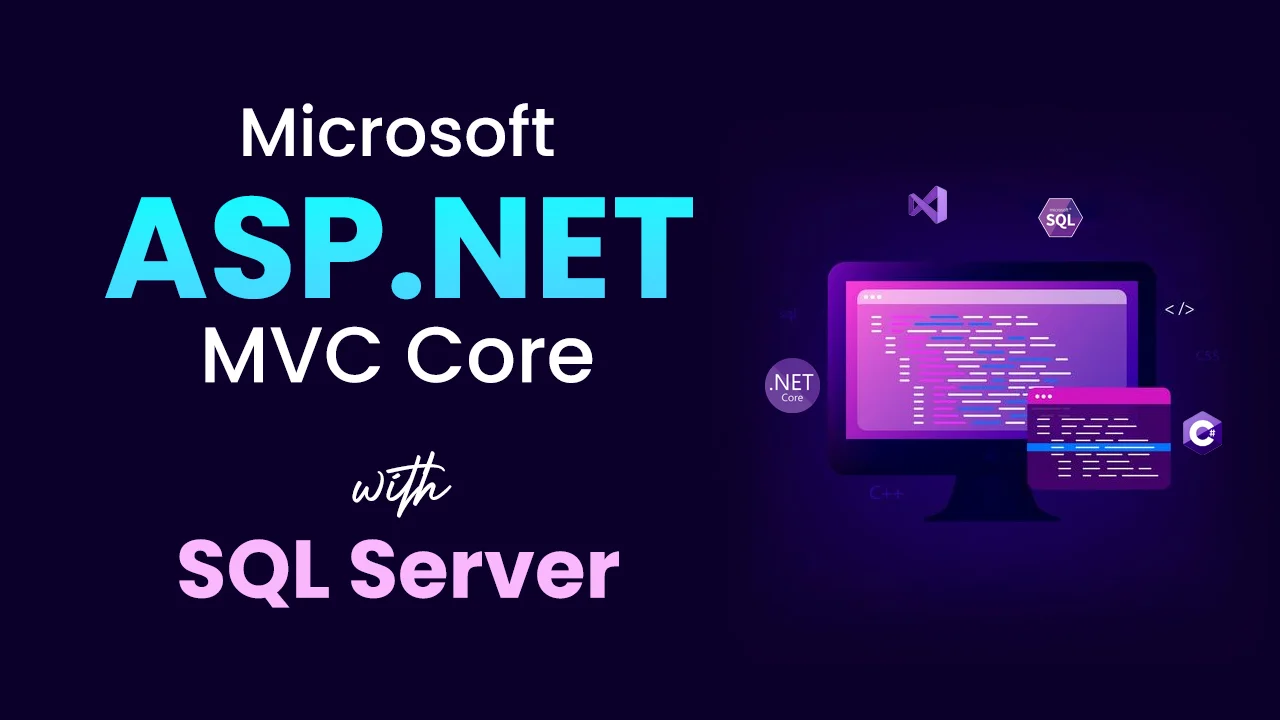
Our ASP.NET developer training course in Bangladesh for PeopleNTech is for you! Enroll in our ASP.NET training course and elevate your skills in modern web application development. Our comprehensive ASP.NET course focuses on the powerful ASP.NET MVC Core framework, providing hands-on experience that prepares you for real-world challenges. As the premier choice for ASP.NET MVC core training in Bangladesh, we are committed to delivering the best ASP.NET course in Bangladesh. With expert instructors and a curriculum tailored to industry needs, our program is recognized as the best ASP.NET training course in Bangladesh. Enroll today and take the first step toward a successful career in web development!
Detailed breakdown of what you will master
ASP.NET training course on PeopleNTech is designed to provide students with a thorough understanding of web application development. This ASP.NET training Course offers comprehensive coverage of the ASP.NET MVC Core framework, empowering you with the skills to build dynamic and scalable web applications.
Throughout the course, you will engage in hands-on projects that reinforce your learning and allow you to apply concepts in real-world scenarios. Recognized as the leading option for ASP.NET MVC vore training, our course is delivered by industry experts who bring valuable insights and practical experience to the classroom.
By choosing our course, you will in best ASP.NET training course in Bangladesh. We ensure you receive top-notch education and career support. Join us today to unlock your potential in the ever-evolving field of web development!
Web development with ASP.NET Core and Microsoft SQL Server involves building dynamic and scalable web applications using the ASP.NET Core framework and a MSSQL Server database. Here's a brief
Course Topic Overview:
What is ASP.NET?
ASP.NET is a free, open-source web framework from Microsoft for building web apps and services. ASP.NET is a cross-platform and runs on Windows, Linux, macOS, and Docker.
ASP.NET Core:
Framework: ASP.NET Core is a cross-platform, high-performance framework for building modern, cloud-based, and internet-connected applications.
MVC Architecture: ASP.NET Core follows the Model-View-Controller (MVC) architectural pattern, providing a structured way to build and organize code.
Microsoft SQL Server:
Relational Database Management System (RDBMS): Microsoft SQL Server is a robust RDBMS that stores and retrieves data in a structured format.
Integration with ASP.NET Core: ASP.NET Core seamlessly integrates with SQL Server, allowing developers to use Entity Framework Core for efficient data access.
Key Components and Concepts:
Controllers and Actions: Controllers handle incoming requests, interact with the database, and return appropriate responses.
Views: Views define the presentation layer and utilize the Razor syntax for creating dynamic HTML content.
Models and Entity Framework Core: Models represent the data structure and are mapped to the database using Entity Framework Core, simplifying database operations.
Middleware: ASP.NET Core middleware handles various aspects of the request-response pipeline, such as authentication, logging, and error handling.
Entity Framework Core:
Object-Relational Mapping (ORM): Entity Framework Core simplifies database interactions by allowing developers to work with .NET objects, which are then mapped to database tables.
Code-First Development: Developers can use the code-first approach, defining models and relationships in code, and then generating the database schema automatically.
Authentication and Authorization:
ASP.NET Core provides built-in support for user authentication and authorization, making it easy to implement secure user access controls.
Razor Pages:
ASP.NET Core includes Razor Pages, a lightweight alternative to the MVC pattern, suitable for simpler applications.
Dependency Injection:
ASP.NET Core features a built-in dependency injection container, facilitating the organization and management of application components.
Cross-Platform and Open Source:
ASP.NET Core is cross-platform, allowing developers to build and deploy applications on Windows, Linux, and macOS. It is also open source, encouraging community collaboration and contributions.
16 Modules carefully structured for step-by-step mastery
Industry standard software and technologies taught in this course








Real engineers working in top global technology companies

Senior Faculty-PeopleNTech

Senior Faculty - PeopleNTech Ltd
Hear what our graduates say about their training experience
“PepoleNTech is a very good institute for students. They take care of the subjects of the training to the students and complete all the trainings correctly and successfully. Everyone at PeopleNTech is extremely sincere. And thanks to PeopleNTech for letting me do course in this beautiful environment.”

Developer
কোর্স সম্পর্কিত সাধারণ প্রশ্নাবলী ও সঠিক উত্তর
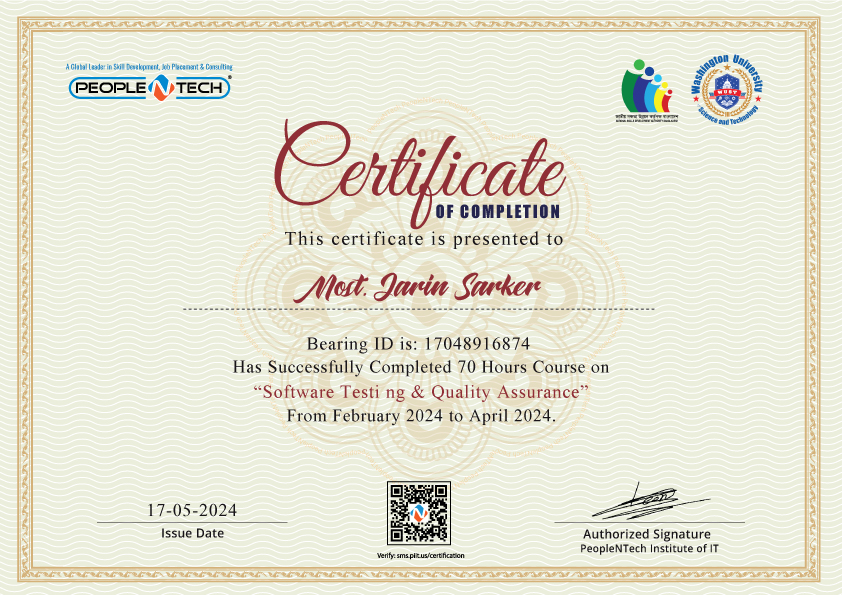
Validate your technical expertise upon successful project submission and assessment. Showcase your verified credentials to employers worldwide.
Other popular programs you might be interested in